
🧭
Centralized backup management
Position DBAegis for database backup dashboard, backup job visibility, storage destinations, schedule management, and multi-database operations searches.
DBAegis is a self-hosted Database Resilience Platform for centralized backup management, restore workflows, recovery validation, storage destinations, notifications, reports, audit visibility, and multi-database operations.
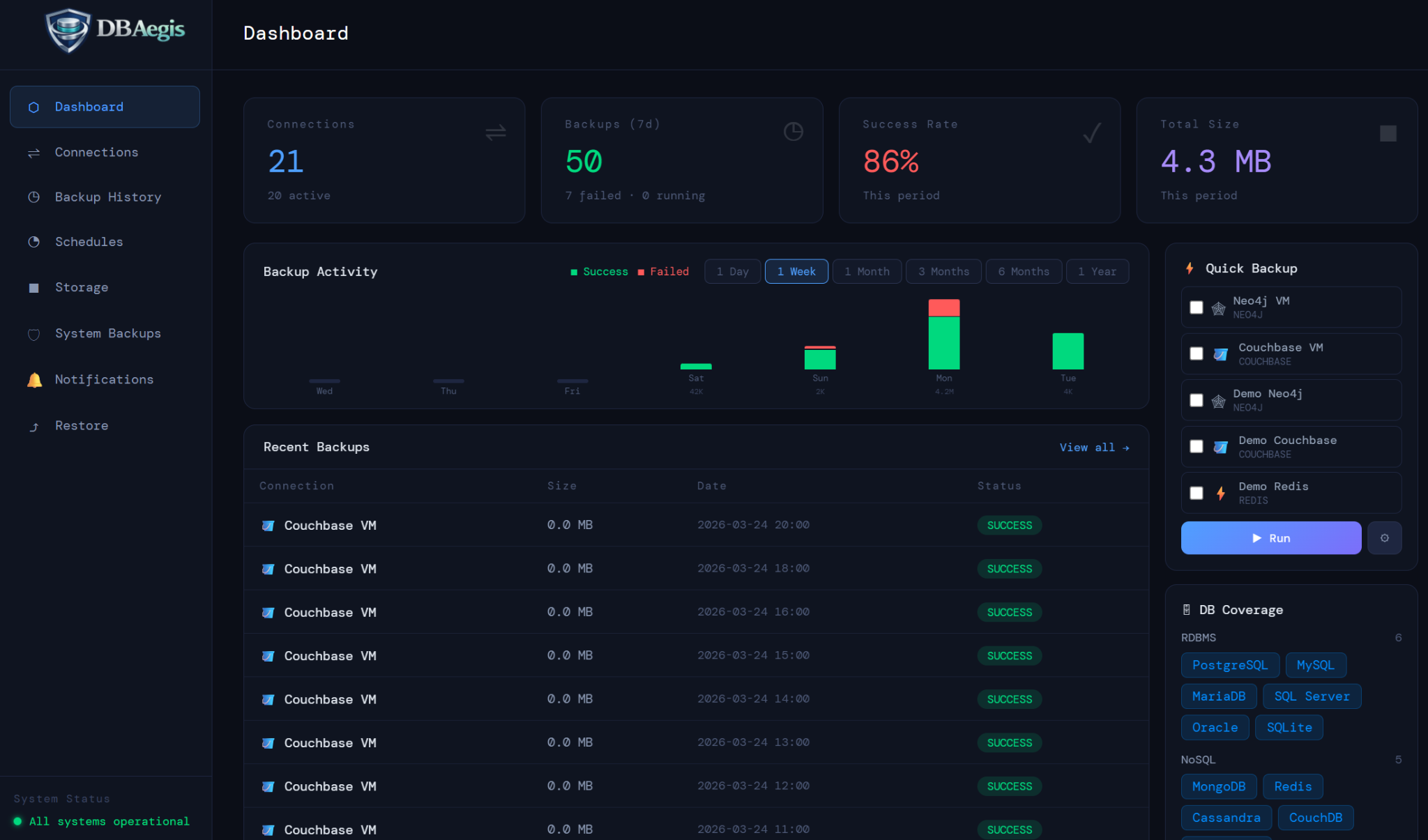
Dedicated landing pages now target PostgreSQL backup restore, Oracle RMAN recovery, MongoDB backup, MySQL/MariaDB backup, SQL Server restore workflows, cloud storage, audit reporting, and restore validation.
Position DBAegis for database backup dashboard, backup job visibility, storage destinations, schedule management, and multi-database operations searches.
Target restore testing, recovery drills, failed restores, audit evidence, and the problem that backup success does not guarantee recoverability.
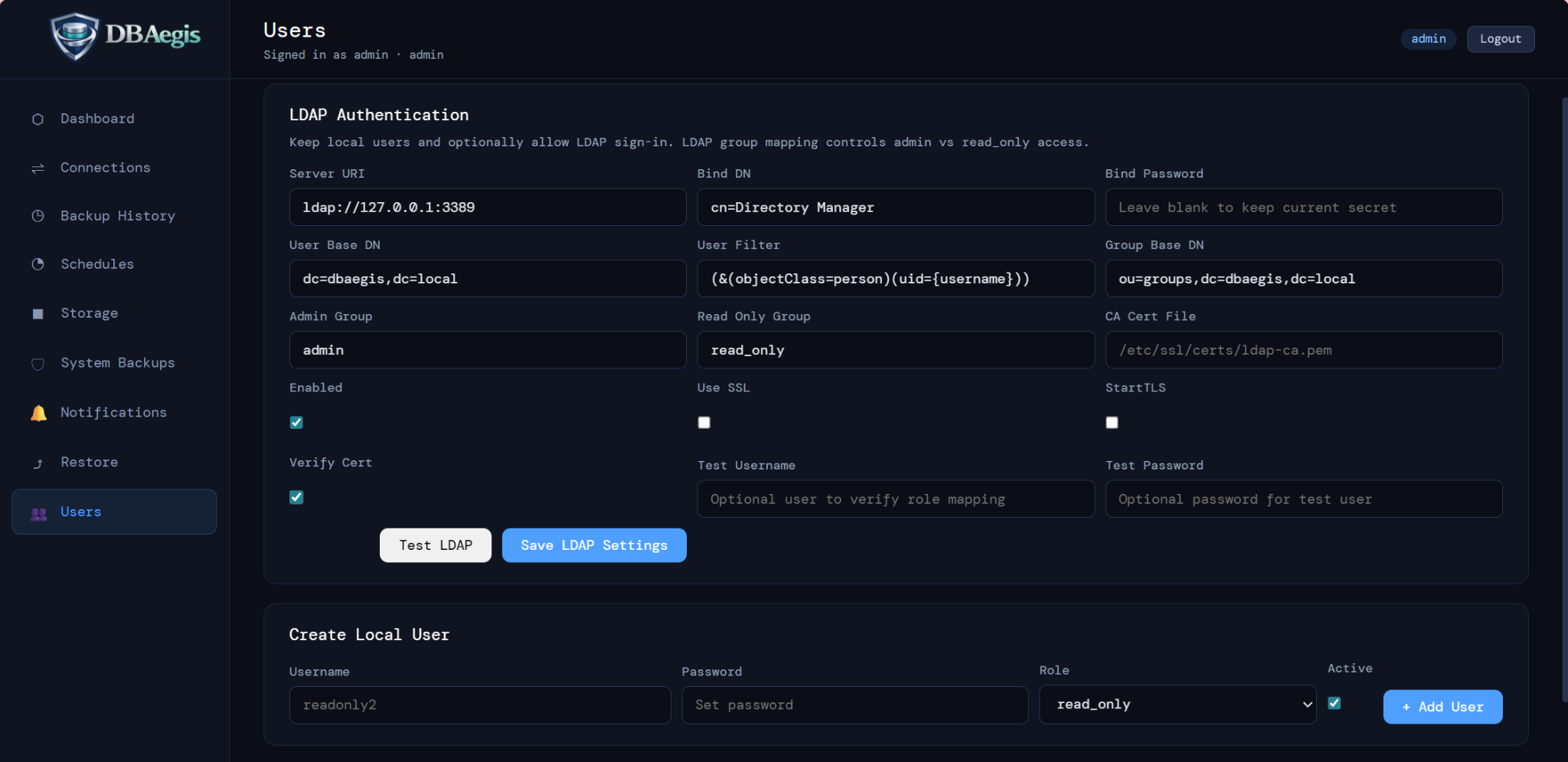
Show RBAC, MFA, LDAP, audit trail, CSV exports, notifications, self-backups, offline packages, and support matrix links for technical buyers.
Each page is written with technical depth, specific keywords, internal links, FAQ schema, and clear calls to action.
Community creates trust. Professional adds production backup/restore team features. Enterprise adds LDAP, webhooks, audit/report exports, and regulated-deployment readiness.
| Capability | Community | Professional | Enterprise |
|---|---|---|---|
| Best for | Evaluation, labs, small local workflows | Production team backup/restore | Regulated or large customer deployments |
| License | No paid license required | Signed license required | Signed license required |
| Database coverage | PostgreSQL, MySQL, MongoDB for local logical workflows | Paid database matrix | Paid matrix plus contracted certification |
| Backup / restore | Local logical only | Local, cloud, DB-server-local, physical, and PostgreSQL/Oracle PITR where supported | Professional plus contracted certification |
| Users | 1 admin | 5 by default | Licensed / unlimited |
| Connections | 3 | 50 by default | Licensed / unlimited |
| Schedules | 3 | 100 by default | Licensed / unlimited |
| Storage types | DBAegis local only | Local, DB-server-local, AWS S3, Azure Blob, GCS | Professional plus enterprise terms |
| Notifications | Locked | Email and daily summaries | Email, daily summaries, and webhooks |
| Access control | Single admin | RBAC and MFA | RBAC, MFA, LDAP / Active Directory |
| Audit and reports | Locked | Audit event trail and in-app views | Audit event trail, CSV export, and report exports |
| Self-backup | Locked | Enabled | Enabled |
| Air-gapped install | No | Optional | Yes |
Capabilities depend on edition, license, database engine, and the support matrix.
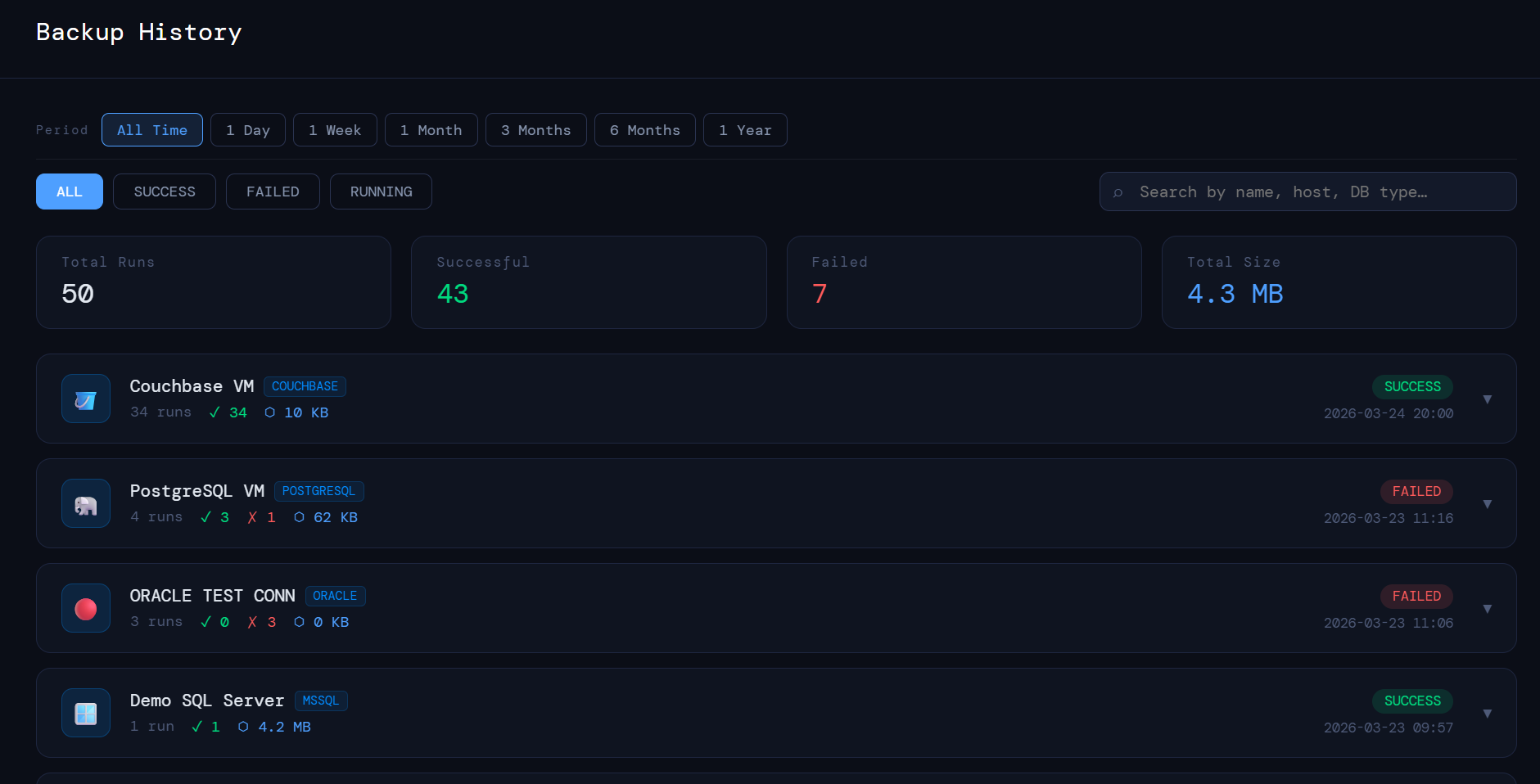
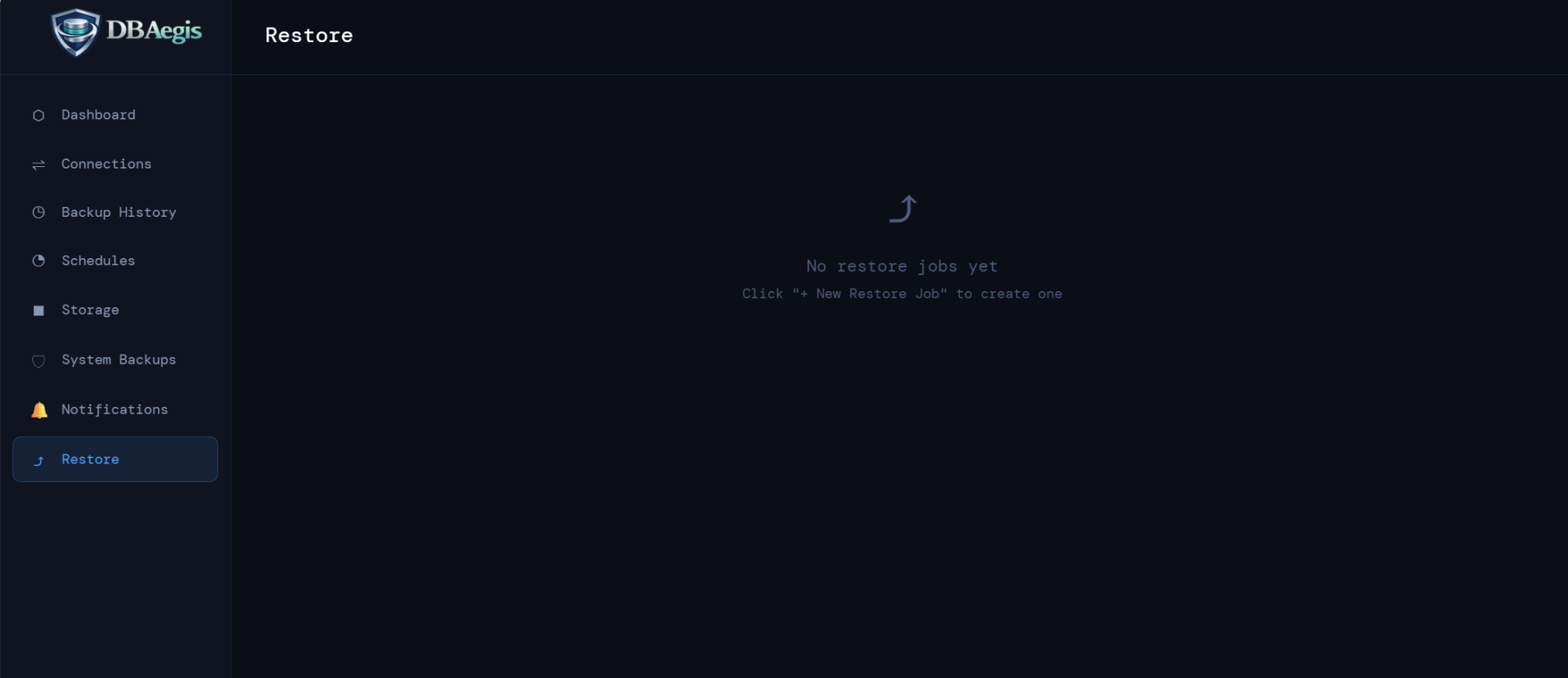
These FAQs help technical buyers and search engines understand the product category.
DBAegis is a self-hosted Database Resilience Platform for centralizing database backup, restore, recovery validation, storage, notifications, reporting, and operational visibility.
No. DBAegis is positioned around recoverability and operational resilience, not just job completion. The product focuses on backup orchestration, restore workflows, validation, audit visibility, and team operations.
Yes. DBAegis Community Edition is open source and intended for evaluation, labs, and smaller local workflows.
DBAegis targets backup and restore workflows across PostgreSQL, MySQL/MariaDB, MongoDB, Oracle, SQL Server, Cassandra, Redis, Neo4j, and other database environments. Current support depends on edition and the support matrix.
Use the open-source Community Edition for evaluation or request a Professional/Enterprise walkthrough for production backup, restore, audit, security, and support requirements.